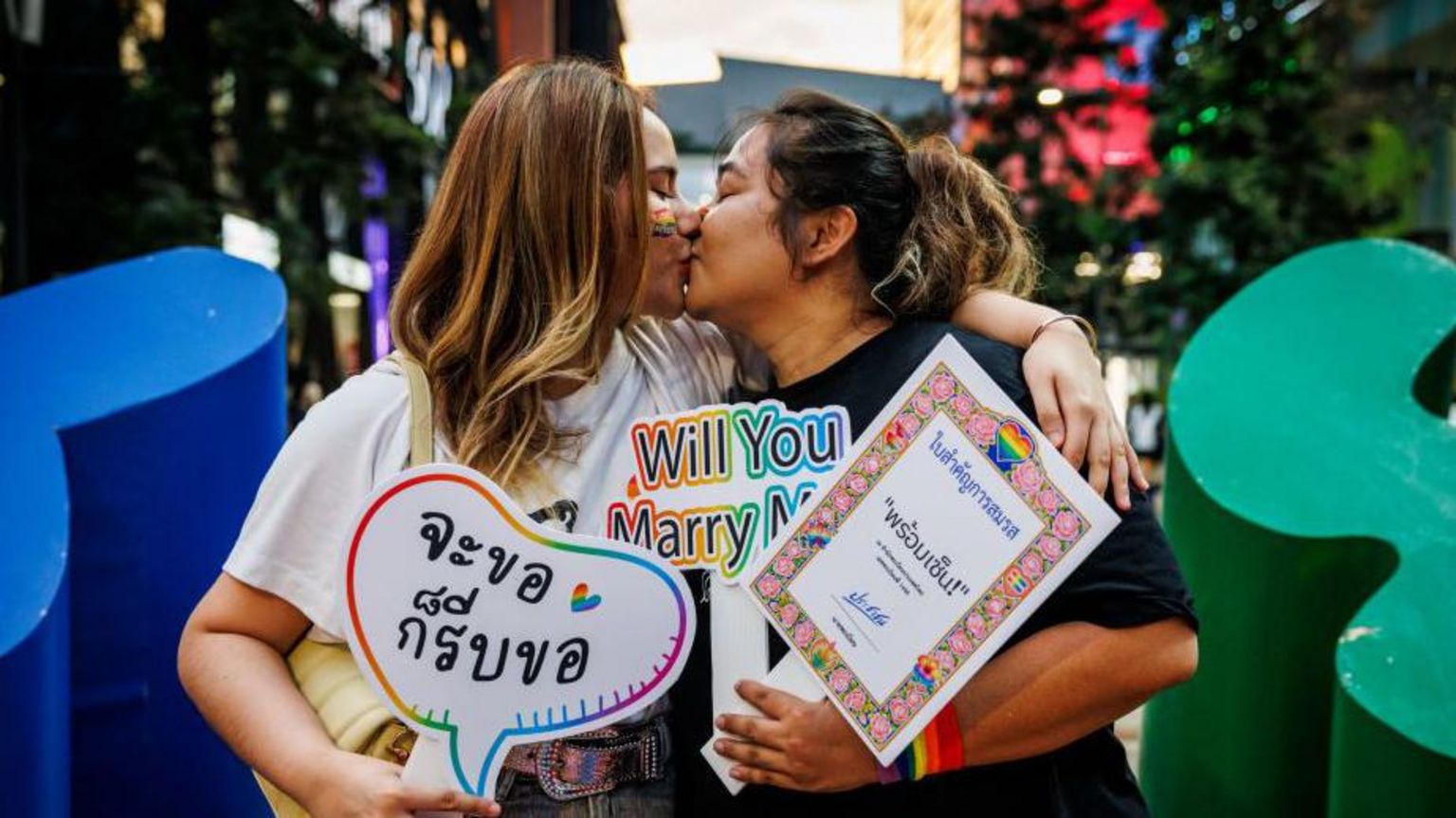
As we all know, Thailand is open and accepting of lesbians, gay men, bisexuals, and transgender people. Image source: BBC.
"It has been a long and tearful struggle for us." Ann "Waaddao" Chumaporn describes the arduous journey behind the legalization of same-sex marriage in Thailand in this way. Now that same-sex marriage has been legalized in Thailand, hundreds of same-sex couples are getting married. People can't help but wonder: why did Thailand manage to legalize same-sex marriage first in Asia (apart from Taiwan, China, and Nepal)?
Many people think that Thailand has always been open and inclusive towards the
LGBT community.
LGBT individuals are visible in all aspects of Thai society. Thai people are easy - going, and Buddhism, followed by more than 90% of Thais, does not prohibit
LGBT lifestyles. So, it might seem that the legalization of
same-sex marriage was a natural development. However, that's not the case. Ms. Waaddao, the organizer of the Bangkok Pride March, said, "It wasn't easy."
Thailand's first Pride march took place only 25 years ago. At that time, it was difficult to obtain police approval for the march. The event was chaotic and lacked a clear theme. After 2006, only two marches were held until 2022. In 2009, a planned Pride march in Chiang Mai had to be cancelled due to the threat of violence. Ms. Waaddao added, "We were not accepted by our families or society. There were times when we thought marriage equality would never happen, but we never gave up."
In the process of striving for equal rights, including marriage equality, the Thai
LGBT community has made a lot of efforts. Chakkrit "Ink" Vadhanavira and his partner started dating in 2001. They were both leading actors in TV series at that time, but the Thai Ministry of Health still defined homosexuality as a mental illness. Chakkrit recalled, "Back then, society couldn't accept a
gay man playing the leading male role. There were many untrue rumors about us in the media, which put a lot of pressure on us." So, they decided to leave the entertainment industry. Now, they are still together and have successfully run a production company.
The portrayal of
LGBT characters in Thai TV dramas has changed significantly. In the past,
LGBT characters were often depicted as comical and odd, but now they have become mainstream characters. Tinnaphop Sinsomboonthong, an assistant professor at Thammasat University who self - identifies as
queer, believes that
LGBT characters in current TV dramas are like ordinary people in real life, such as colleagues in the office or neighbors. This change has helped to transform the perceptions and values of people of all ages. In particular, "Boys' Love" dramas have become popular in the past decade and are a successful cultural export of Thailand, attracting a large number of overseas audiences. These dramas not only make society more inclusive towards the
LGBT community but also promote their pursuit of equal rights.
At the same time,
LGBT activists have become more united and focused in promoting legal change. Many
LGBT groups jointly launched the "Change 1448" campaign (1448 is the clause number in the Thai Civil Code regarding the definition of marriage), and later formed the Rainbow Coalition for Marriage Equality. They also cooperated with other groups fighting for rights and freedoms and communicated and negotiated with political parties in parliament to persuade them to change their attitudes towards
same-sex marriage laws. The resumption of the Pride march in 2022 and the government's promotion of Thailand as an ideal destination for
LGBT tourists have also contributed to the change in public perception. Tinnaphop said, "We didn't fight; we negotiated. We knew we had to talk to Thai society and change people's attitudes bit by bit."
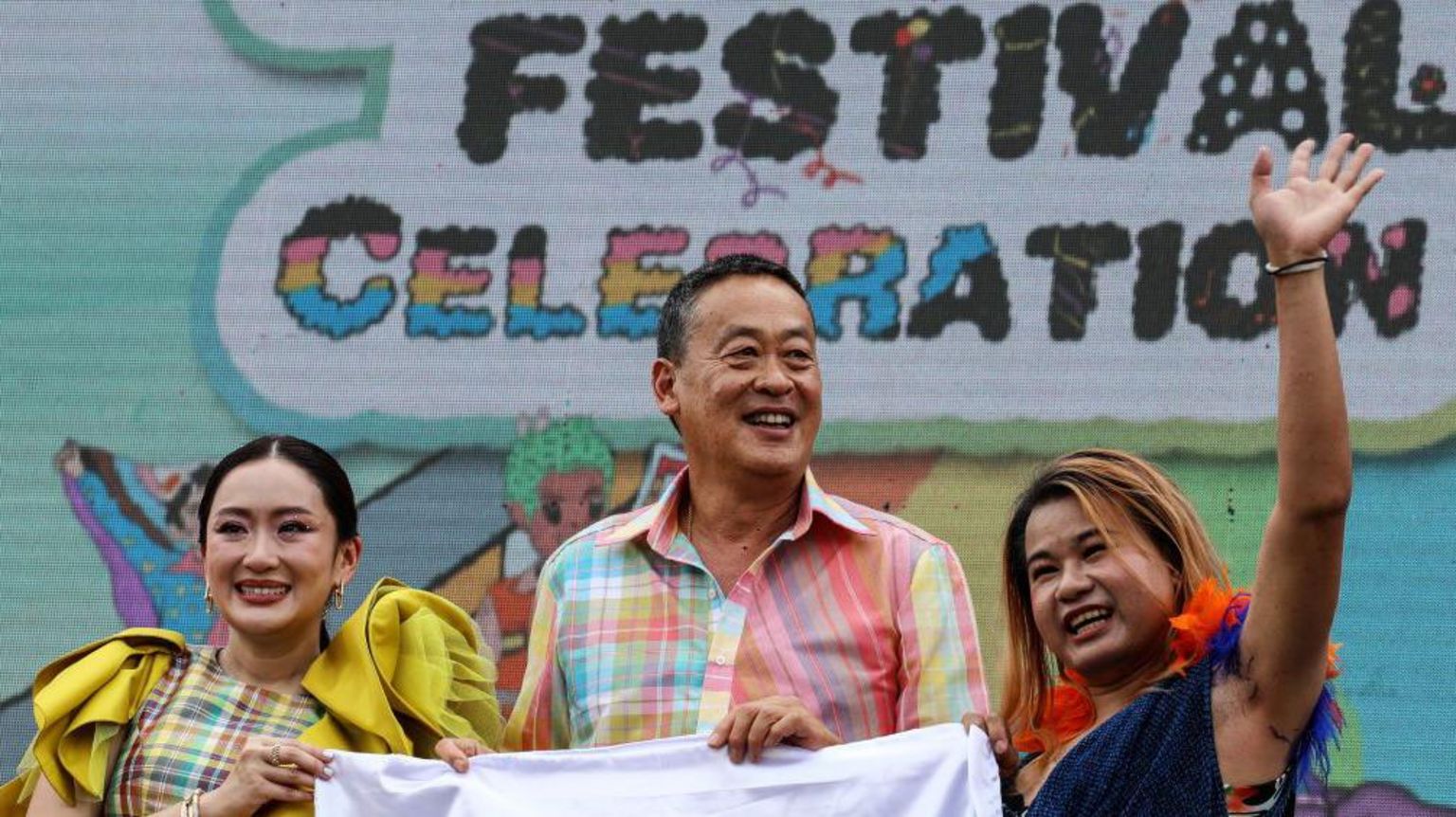
Marriage equality now has the support of political leaders, including Paetongtarn Shinawatra (left) and her predecessor, Srettha Thavisin (middle). Image source: BBC.
The legalization of same-sex marriage in Thailand also benefited from changes in the political environment. After the 2014 coup, Thailand was ruled by a conservative military government. The military government only considered recognizing the civil partnerships of LGBT couples without giving them full rights, such as the right to inheritance. In the 2019 election that restored civilian rule in Thailand, the newly emerging reformist party Future Forward, which fully supported same-sex marriage, performed outstandingly and won the third - largest number of seats, indicating the Thai society's desire for change. In 2020, Future Forward was dissolved due to a controversial court ruling, triggering months of student - led protests. LGBT activists were very active in these protests, which brought them more attention nationwide. In the 2023 election, Move Forward, the successor of Future Forward, performed even better than in 2019 and won more seats than any other party. By this time, the controversy over same-sex marriage had significantly decreased, and passing the law became an achievement for the coalition government to please the public.
In Asia, Thailand's legalization of
same-sex marriage is an exception. In Malaysia, Indonesia, and Brunei, influenced by Islam,
same-sex marriage is hardly achievable, and the
LGBT community faces discrimination and persecution. In Brunei,
same-sex sexual acts between men can even be sentenced to death. In the Philippines, the acceptance of
LGBT couples living openly is gradually increasing, but the Roman Catholic Church strongly opposes
same-sex marriage. Vietnam and China are different from Thailand. Although there are no religious and ideological barriers, it is difficult to promote legal change. In democratic countries like Japan and South Korea, where political parties are mostly conservative and dominated by older men, the prospects for
same-sex marriage are also bleak.
Thailand hopes to benefit from this pioneering move. Tourism is one of the bright spots in Thailand's post - pandemic economic recovery. Thailand is regarded as a safe and friendly destination for
LGBT tourists. Now, more and more
same-sex couples from other Asian countries are choosing to live in Thailand. With the legal recognition of their marriages, they can enjoy almost the same rights and protections as heterosexual couples, allowing them to raise children and grow old together.
Editor: Daya, News Editorial Department
