
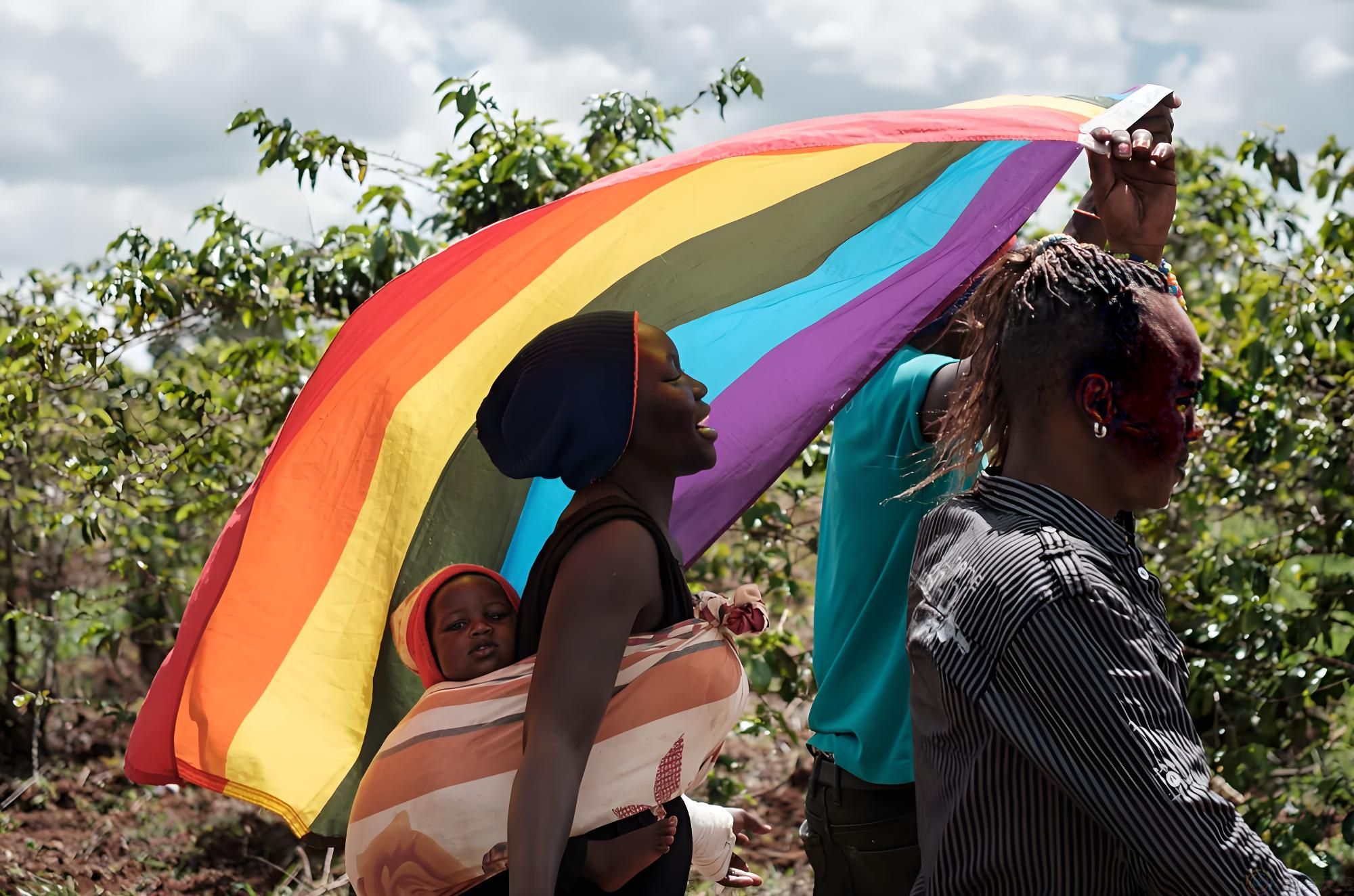
LGBTQ refugees from South Sudan, Uganda and Congo on their way to demand protection at the office of the United Nations High Commissioner for Refugees in Nairobi, Kenya, in 2019. They said they fled the Kakuma and Dadaab refugee camps to avoid life-threatening incidents.
In Limuru, Kenya, Ugandan refugee Constance is deeply worried. A plan in the country aimed at integrating hundreds of thousands of refugees into society, the Shirika Plan, has left him and his fellow LGBTQ refugees fearing more severe marginalization.
The Shirika Plan was launched by relevant people in the country last month. "Shirika" means "coming together" in Swahili. The plan will transform two of the world's largest refugee camps into open cities, giving over 800,000 refugees the opportunity to access jobs, healthcare, and other services. It allows them to leave the camps and live among local Kenyans. Constance, who runs a safe house for Ugandan LGBTQ refugees, said that the idea of integration is good as it can guarantee refugees a free life and all rights, just like any other Kenyan. However, he did not disclose his last name for safety reasons.
However, Constance pointed out that organizations representing the LGBTQ community were not invited to the public forums held in major cities to discuss the plan, which was first proposed in 2023. The LGBTQ community has many concerns regarding safety, health, and housing, but they have no way to voice them during the decision - making process.
John Burugu, Kenya's refugee commissioner, said that all those affected by the Shirika Plan had been invited to comment. People don't necessarily have to attend the public participation forums in person, and the views of groups and organizations that submitted written opinions would also be considered. But organizations defending the rights of LGBTQ refugees still worry that this vulnerable group is being overlooked.
The multi - year Shirika Plan has been praised by the UNHCR as an opportunity to improve the lives of refugees and create economic opportunities for Kenya. For years, Kenya has hosted a large number of refugees from Somalia, South Sudan, and the Democratic Republic of Congo. Many of them have settled in the sprawling Kakuma and Dadaab camps, and their children have grown up there. However, people in the camps face restrictions in their lives. They cannot legally open bank accounts, start businesses, or work. Their children are not admitted to public schools, and asylum seekers need permits to move around the country. The 2021 Kenyan Refugee Act was supposed to address these issues, but bureaucratic obstacles and a lack of resources have prevented its full implementation.
At the formal launch of the Shirika Plan, Filippo Grandi, the UN High Commissioner for Refugees, said that the plan shows that refugees can shift from relying on humanitarian aid to becoming more self - sufficient. Relevant people also emphasized that the plan is centered on human rights. It is expected to be implemented by 2036 at a cost of about $943 million. The funds will come from the World Bank, the UNHCR, and private institutions, and the country's government will also allocate funds in its June budget.
However, the plan has faced opposition from some community leaders. Daniel Epuyo, a member of parliament for the Turkana West constituency where Kakuma is located, said that community leaders were not adequately consulted, and they prefer the repatriation of refugees rather than integration.
In recent years, anti - LGBTQ sentiment has been on the rise in some parts of Africa. Activists worry that the Shirika Plan could exacerbate this situation in Kenya. Kenya was once a haven for LGBTQ refugees. In 2021, 1,000 Ugandans sought asylum here, and the number may have increased since neighboring Uganda passed a law in 2023 that includes the death penalty for "aggravated homosexuality." Although Kenya has statutes criminalizing same - sex relations, they are rarely enforced. However, cases of homophobic abuse and discrimination still occur, and the LGBTQ community, including refugees, may become targets of political attacks. Last year, Kenya's refugee commissioner said that persecution due to LGBTQ identity cannot be a reason for protection in Kenya.
Craig Paris, the executive director of the Refugee Coalition of East Africa, pointed out that homophobic attacks are frequent in refugee camps, especially in Kakuma. This means that under the Shirika Plan, the government must take preventive measures. Kamya Chrisestom, a transgender refugee who was attacked in Kakuma, is worried that her safety cannot be guaranteed after integrating with the local community.
Ibrahim Kazibwe, the founder of the Community Empowerment and Self - Support Organization, said that LGBTQ groups had petitioned donor agencies to pressure the country's government to incorporate gay rights into the Shirika Plan. They hope that since the plan is centered on human rights, the rights of the LGBTQ community should also be included.
Njoki Mwangi, a spokesperson for the UNHCR in Nairobi, said that the UNHCR has worked closely with the country's government to ensure that "no group is left behind," and inclusivity and non - discrimination are key guiding principles. But many gay refugees say that the government's years - long delay in processing their asylum applications has seriously hindered their access to their rightful rights. 32 - year - old Constance and 15 other Ugandans live in the town of Limuru northwest of Nairobi, all waiting for the results of their asylum applications. Constance has not received approval since he first applied eight years ago. The long wait has worn him down. He underwent the last vetting process in 2023 but has yet to receive feedback.
Editor: Robin