
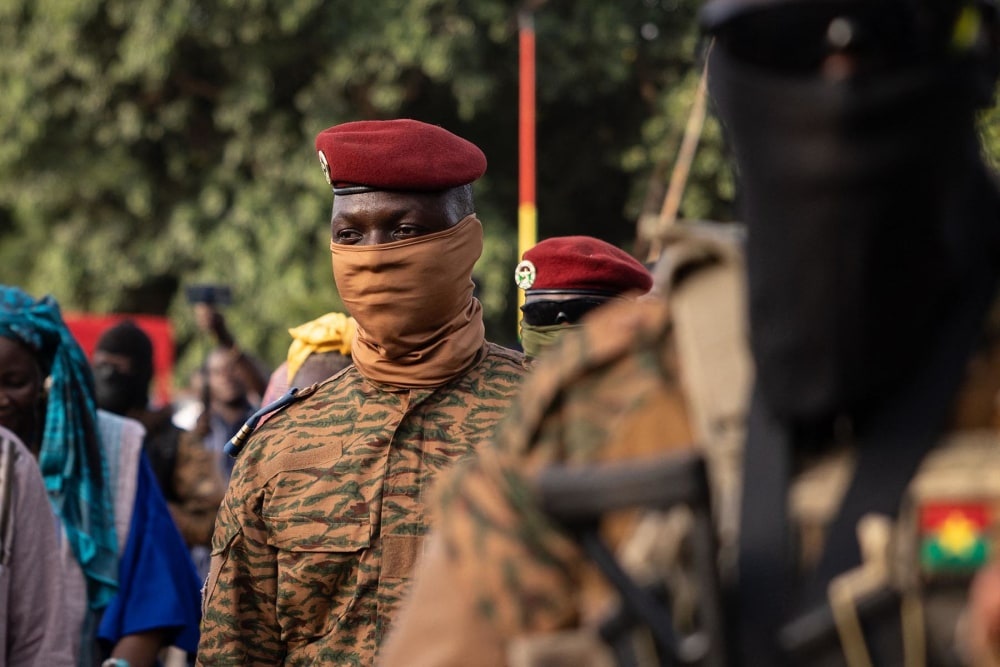
Burkina Faso President Ibrahim Traore at a ceremony in Ouagadougou on Oct. 15, 2022.
Burkina Faso’s transitional parliament has passed a new law criminalizing acts deemed to "promote LGBTQ practices," with violators facing imprisonment, fines, and other sanctions. The country’s justice minister confirmed that the law, titled the Persons and Family Code, also tightens regulations on nationality and stateless persons, making Burkina Faso another African nation to criminalize activities related to lesbian, gay, bisexual, and transgender (LGBT) groups in recent times.
It is understood that the law was unanimously approved by the unelected 71-member transitional parliament on a Monday and is currently awaiting the signature of Ibrahim Traore, the leader of the military junta, to take effect. On a Monday evening, Justice Minister Edasso Rodrigue Bayala clarified the details of the law on state television: "Offenders will be sentenced to 2 to 5 years in prison and required to pay a fine." He further explained, "Anyone who engages in homosexual practices will be brought before a judge; non-Burkina Faso citizens who are repeat offenders will be deported."
The country’s government stated that the law aims to modernize family law and clarify nationality management rules. However, rights advocates generally believe that the law’s restrictive provisions targeting LGBTQ groups and the curtailment of legal remedies in nationality cases may harm the rights of minority groups.
Across the African continent, several conservative African countries have already implemented anti-gay laws, such as Senegal, Uganda, and Malawi. Nevertheless, some nations have adopted more inclusive measures: South Africa, Botswana, and Angola have legalized activities related to LGBTQ groups or introduced special rights protection measures, creating a sharp contrast.
Notably, since Burkina Faso’s 2022 military coup, violent conflicts caused by Islamist militants have continued to escalate in the western part of the country, and the ruling military has become increasingly intolerant of dissent. The passage of this law is viewed by some observers as a key signal of the country’s social policy shifting toward conservatism. However, no civil society organizations or LGBTQ groups have yet publicly responded to the potential impact of the law on their lives.
Africa Editorial Office: Adeola