
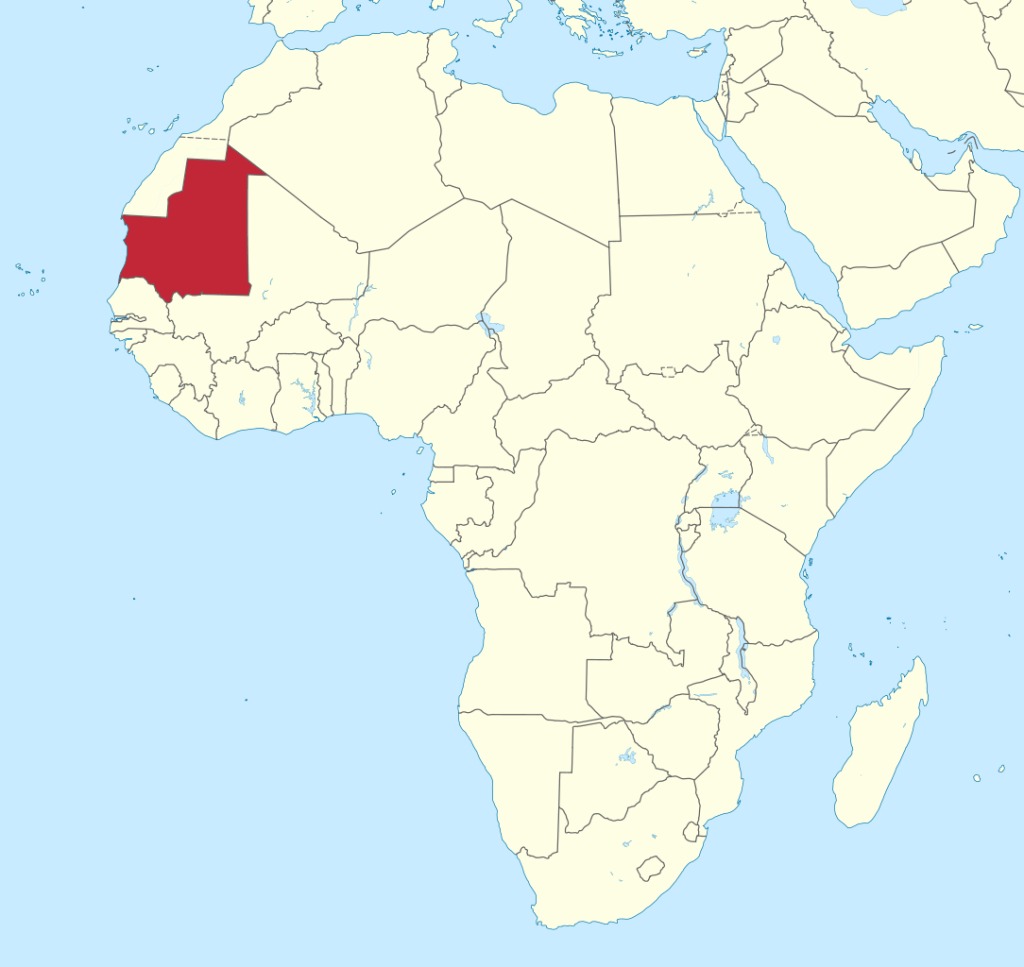
Location of Mauritania in north-west Africa. (Map courtesy of Wikimedia Commons)
In Mauritania, same-sex sexual activity is criminalized under the penal code, which prescribes death by stoning for men, though the government confirmed in 2021 a de facto moratorium on capital punishment. Despite this, reports of arrests and detentions on related charges persist in recent years, alongside harassment of LGBTIQ individuals.
Widespread fear of discrimination, rejection, and social ostracism leads many LGBTIQ people to keep their identities private, resulting in low public visibility. This secrecy perpetuates stigma and limits access to support. The country has served as a refuge for some LGBTIQ individuals from Senegal since 2008, when public controversies over homosexuality intensified there. Certain Senegalese LGBTIQ persons have received refugee status from the United Nations High Commissioner for Refugees, yet they continue to face significant legal perils, health challenges, and societal rejection, complicating efforts to obtain adequate protection and assistance.
The law specifically targets Muslim men, with uncertainty regarding its application to non-Muslim men. Enforcement evidence includes occasional arrests. A notable 2020 incident in the capital, Nouakchott, involved the arrest of ten individuals following social media circulation of footage alleged to depict a same-sex wedding. Police later clarified it was a birthday celebration, initially detaining the group for “imitating women.” According to police records, eight men confessed to being homosexual during interrogation without legal representation, though they retracted these statements at trial.
Eight were convicted and sentenced to two years’ imprisonment for “indecency” and “inciting debauchery” under Articles 264 and 306 of the penal code, respectively. One woman received a one-year suspended sentence for involvement in “inciting debauchery” by attending, while the restaurant owner was acquitted.
Human rights observers note that the legal framework and societal attitudes create an environment of fear, hindering open expression and rights advocacy among LGBTIQ communities. While the death penalty remains unenforced, the threat and ongoing harassment pose substantial barriers. Mauritania’s situation illustrates the complex challenges faced in regions balancing legal prohibitions with social realities for sexual minorities.
Africa Editorial Office: Adeola