
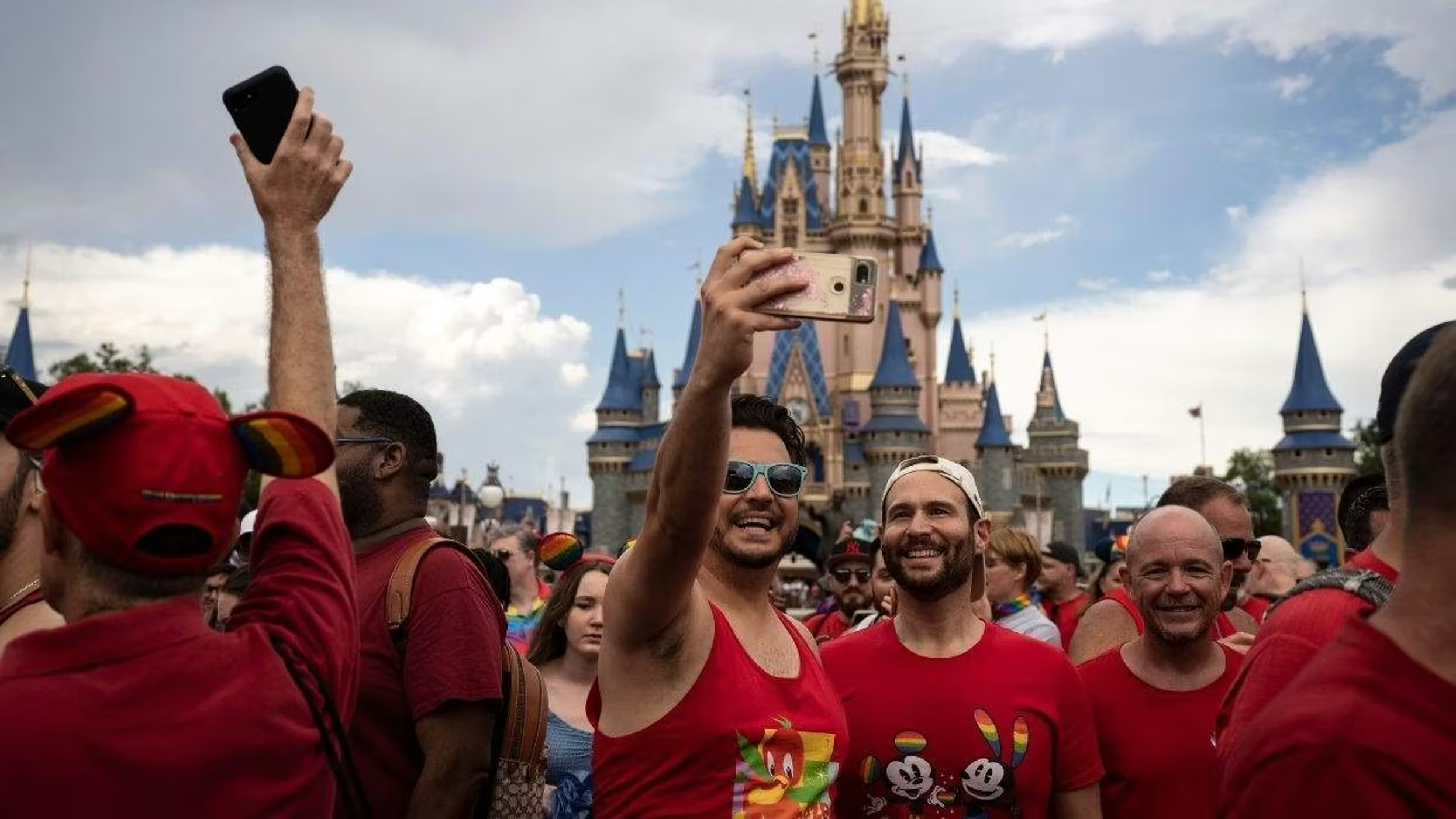
Christopher Casanova (left, with sunglasses) takes a selfie with Danny Eguizabal after a group photo was taken in front of the Cinderella Castle at Disney World's Magic Kingdom during Gay Days, June 3, 2023, in Lake Buena Vista, Florida.Thomas Simonetti for The Washington Post via Getty Images
In 2026, a landmark annual LGBTQ+ tourism event in Orlando, Florida, United States, officially announced its cancellation. Originally scheduled for June 4-7, the 35th-anniversary gathering was historically recognized as one of the nation's largest celebrations for the diverse gender community. The organizers released a public statement expressing deep regret, indicating that the event had to be paused due to multiple insurmountable challenges.
The core catalysts behind this significant decision stem from an increasingly severe commercial and political environment. The organizers explicitly cited sudden changes to host hotel agreements, the withdrawal of key corporate sponsors, and broader nationwide pressures targeting LGBTQ+ gatherings as primary factors for the cancellation. Although officials emphasized that this is merely a "pause" rather than a permanent end—urging supporters to remain visible by wearing the signature red shirts to theme parks during the originally planned weekend—the move has undoubtedly cast a shadow over the national equality movement.
This incident unfolds against the backdrop of the Florida state legislature accelerating several restrictive legislative measures. Currently, a local bill labeled by equality advocates as the "Anti-Diversity" bill is under active deliberation. This proposal seeks to comprehensively prohibit local governments from enacting policy responses based on sexual orientation, gender identity, and racial differences, while threatening the removal of local officials who support the concepts of "diversity, equity, and inclusion". Analysts warn that if enacted, officials would be legally barred from supporting or hosting related Pride events, and even routine cultural or religious observances could face extreme litigation risks.
Since its grassroots inception in 1991, this Orlando gathering evolved from a single-day theme park outing into a comprehensive five-day tourism festival, drawing approximately 180,000 global visitors during its peak. It served not only as a cultural festival but also as a crucial economic engine, injecting over $100 million in tourism revenue into the regional economy annually. According to market research data, the LGBTQ+ community in the country commands a spending power of up to $1.4 trillion, wielding undeniable influence as key consumers and word-of-mouth promoters.
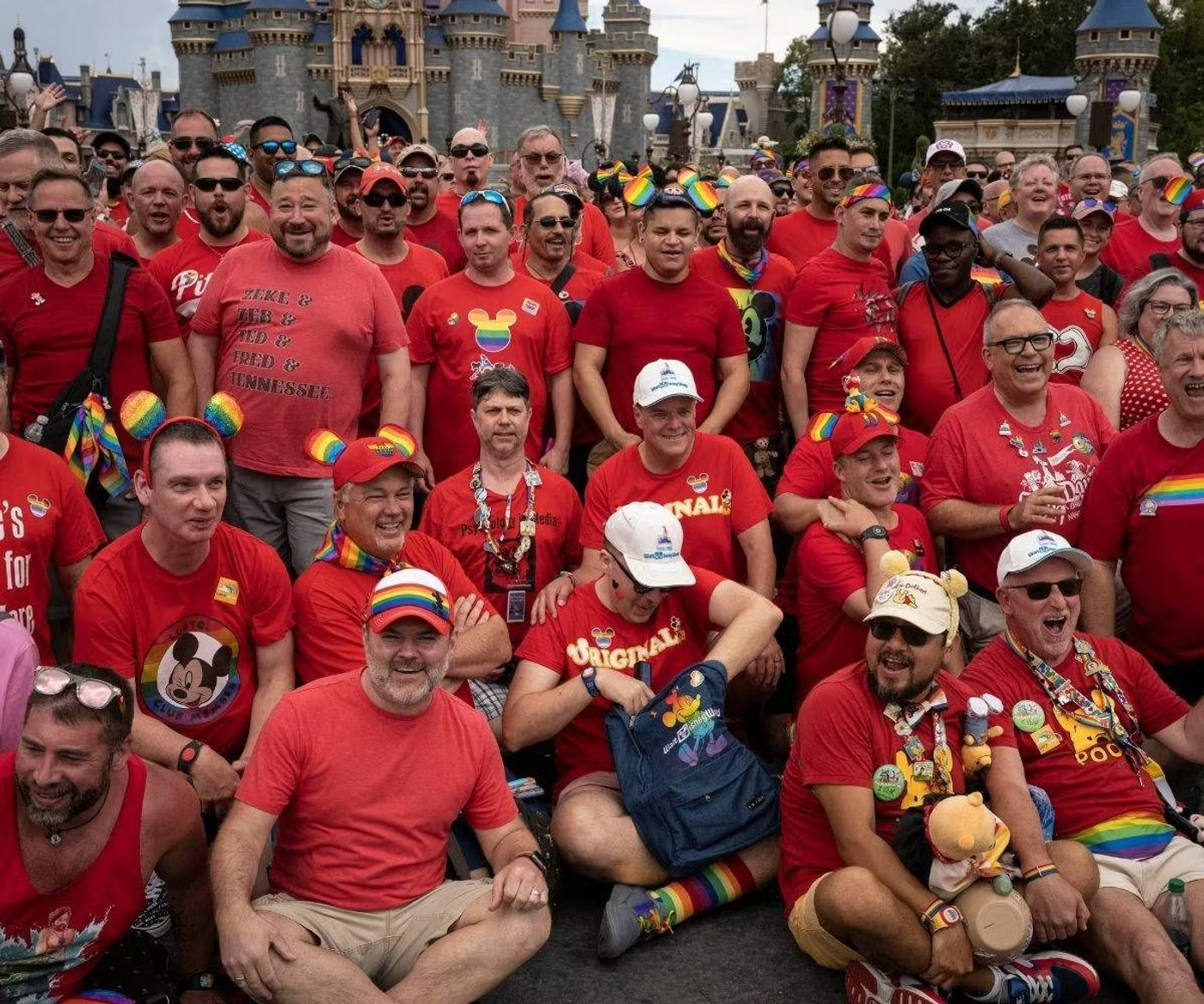
Participants of "Gay day" gather to pose for a photo at Disney World's Magic Kingdom on Saturday, June 3, 2023, in Lake Buena Vista, Fla. Thomas Simonetti for The Washington Post via Getty Images
The cancellation has not only shocked the community but also created a chilling effect on Florida's broader tourism sector. While another independent LGBTQ+ tourism event scheduled in Orlando during the same period is proceeding as planned with nearly sold-out tickets, its organizers admitted that the complex political climate has led to a decline in international tourist numbers. Furthermore, some major liquor sponsors have withdrawn their support out of fear of being associated with "divisive" events.
A spokesperson for a prominent human rights advocacy organization commented that the sustained political suppression targeting marginalized communities is yielding substantive destructive consequences—imperiling the survival of community organizations and severely damaging local economies. Nevertheless, equality groups firmly stated that attempts to suppress diverse voices through economic pressure and policy intimidation will ultimately fail, expressing the community's anticipation to return to the public sphere with greater resilience in the future.
North American Editorial Office: Robin