
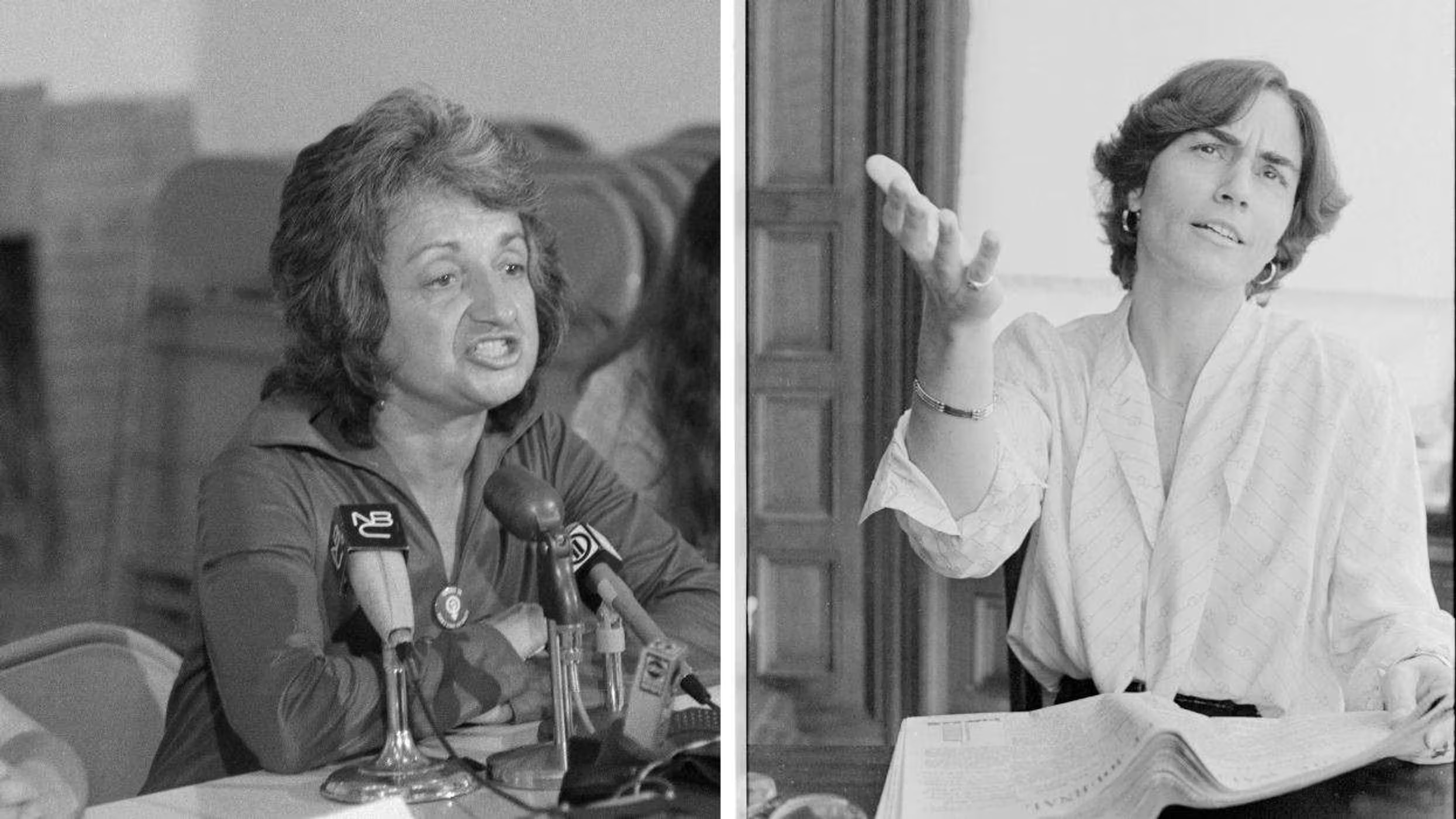
From left: Betty Friedan and Rita Mae Brown,Bettmann via Getty Images; Roger Ressmeyer/Corbis/VCG via Getty Images
In the late 1960s and early 1970s, the second wave of the women's liberation movement was rapidly gaining momentum across North America. However, behind the rising calls for equality, the movement experienced severe internal divisions and growing pains regarding the inclusion of the LGBTQ community.
At the time, certain leaders of mainstream women's organizations worried that the participation of homosexual individuals would negatively impact the movement's public image. One prominent co-founder of a leading women's advocacy group even publicly dismissed lesbians with the derogatory label "Lavender Menace," spearheading an effort to purge multiple LGBTQ activists from the organization's core. From the perspective of these mainstream advocates, it was necessary to strip away any controversial labels of diverse orientations to cater to broader societal acceptance.
Nevertheless, the marginalized lesbian community did not remain silent. In 1970, at a major congress in New York aimed at uniting women, dozens of LGBTQ activists orchestrated a highly theatrical protest. They unexpectedly cut the venue's power, subsequently appearing in uniform shirts emblazoned with "Lavender Menace" and taking over the stage. This non-violent demonstration, lasting over two hours, utilized humor and determination to force traditional advocates in attendance to confront the internal discrimination within the women's movement, sparking widespread emotional resonance. The following year, the mainstream organization officially passed a resolution acknowledging that the oppression of lesbians was a legitimate concern of the broader equality movement.
This courageous struggle eventually reached a historic turning point. In 1977, during a government-funded national women's conference, delegates formally integrated lesbian rights into the discussions of a national action plan, alongside issues like workplace equality and reproductive freedom. Despite pressure from conservative anti-gay activists, the convention overwhelmingly passed a resolution protecting individuals of diverse sexual orientations from discrimination, and the very leader who had coined the "Lavender Menace" rhetoric issued a public apology during the conference. This moment marked the profound integration of the women's movement and the movement for homosexual equality.
Today, participants of this historic protest noted in media interviews that prejudice against minority groups still persists in current society. Drawing on their personal experiences, they encourage the younger generation: driving social change does not require waiting for a massive army; as long as one possesses firm convictions and bravely speaks out, the light of a few can equally illuminate the path to equality.
North American Editorial Office: Robin