
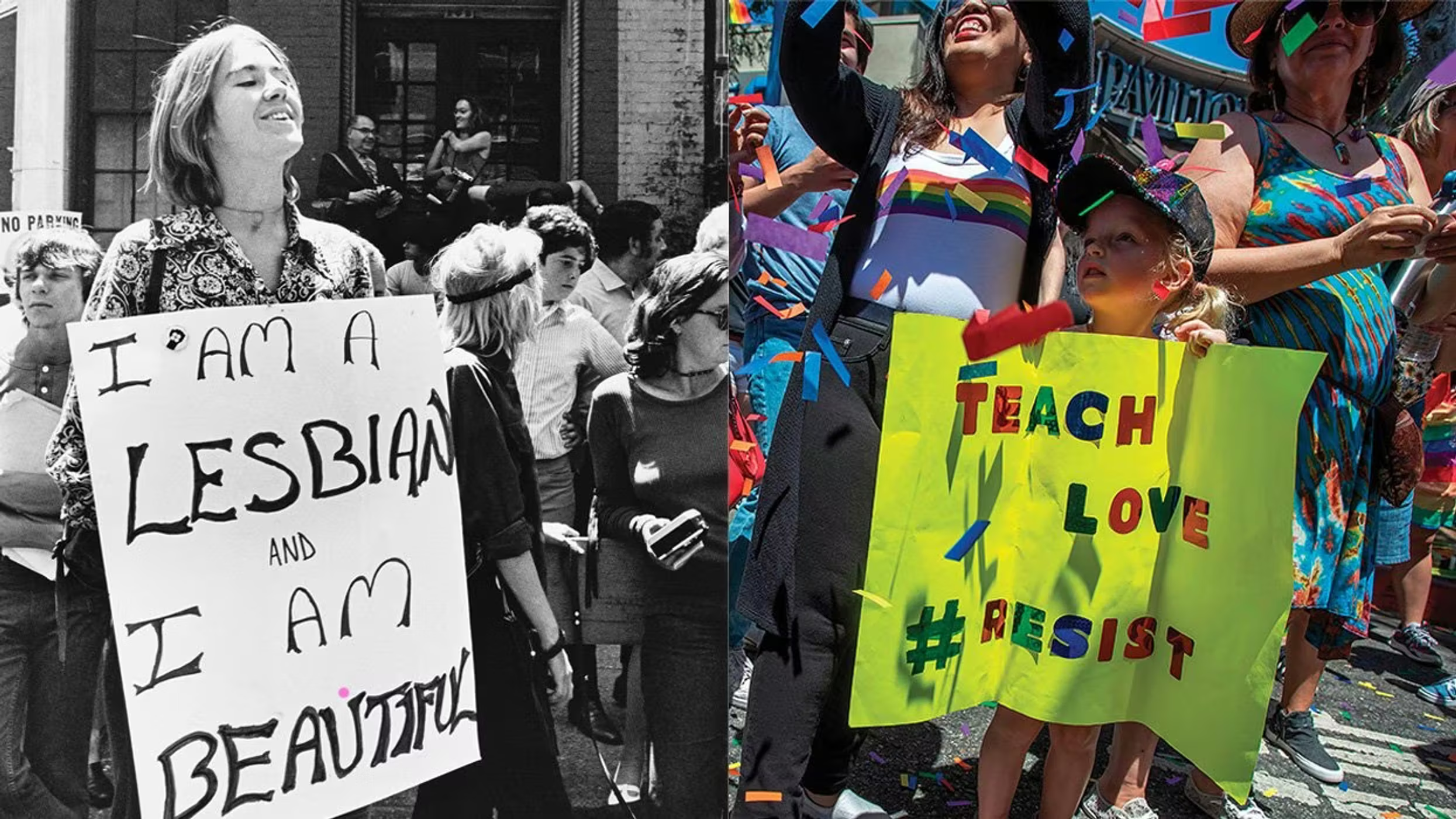
It's important for future generations to learn about LGBTQ+ history.Pictorial Parade/Archive Photos/Getty Images; DAVID MCNEW/AFP via Getty Images
NORTH AMERICA — Across the continent, numerous grassroots organizations are striving to construct a permanent cultural repository for the LGBTQ community's past. From old magazines and concert ticket stubs to various pride event souvenirs, these everyday artifacts—once relegated to the depths of storage closets—are progressively becoming vital puzzle pieces in reconstructing the authentic history of the queer community.
Archivists emphasize that the proper preservation of historical documents can prove to the public that diverse identities have always existed, thereby offering psychological solace to those feeling isolated. For instance, "Invisible Histories," a community archive dedicated to safeguarding the LGBTQ cultural heritage of the Deep South, is actively searching for such materials. According to its co-founders and co-executive directors, Joshua Burford and Maigen Sullivan, an authentic historical record dispels the societal misconception that queer identity is exclusively a modern phenomenon for young adults, effectively bridging generational gaps and showcasing the community's enduring survival.
The organization's collections are highly diverse, featuring items like flyers from a 1989 drag ball that raised funds for a local AIDS organization, as well as digitized oral history cassettes recorded by equality activists in the 1980s and 90s. Sullivan notes that artifacts do not need to be decades old to hold archival value; the everyday occurrences of the present possess profound, cross-generational significance. In her view, utilizing archives to demonstrate the community's existence and resistance is a crucial strategy for confronting an increasingly hostile environment.
This philosophy is equally validated by the operations of the "Lesbian Herstory Archives". Operating as a volunteer-run institution since the early 1970s, the organization focuses on preserving lesbian history. Olivia Newsome, a special collections coordinator, stated that in an era where external forces are deliberately attempting to erase the community's footprint, archiving one's own life and the lives of peers becomes a radical act of self-actualization. She stressed that placing oneself within a broader historical context is a powerful action in a society that attempts to deny a specific group's existence.
Currently, as the national government progressively dilutes and removes transgender and queer identity markers from official websites and public policies, related academic archives are facing potential security threats. To counteract this situation, grassroots archival organizations are proactively seeking collaborations with academic institutions to ensure that these invaluable cultural assets remain safe and accessible for years to come.
As Newsome concluded, archiving is not a privilege reserved solely for the famous or the elite. Every ordinary individual's life trajectory holds irreplaceable value and deserves to be permanently remembered and respected by the world.
North American Editorial Office: Robin