
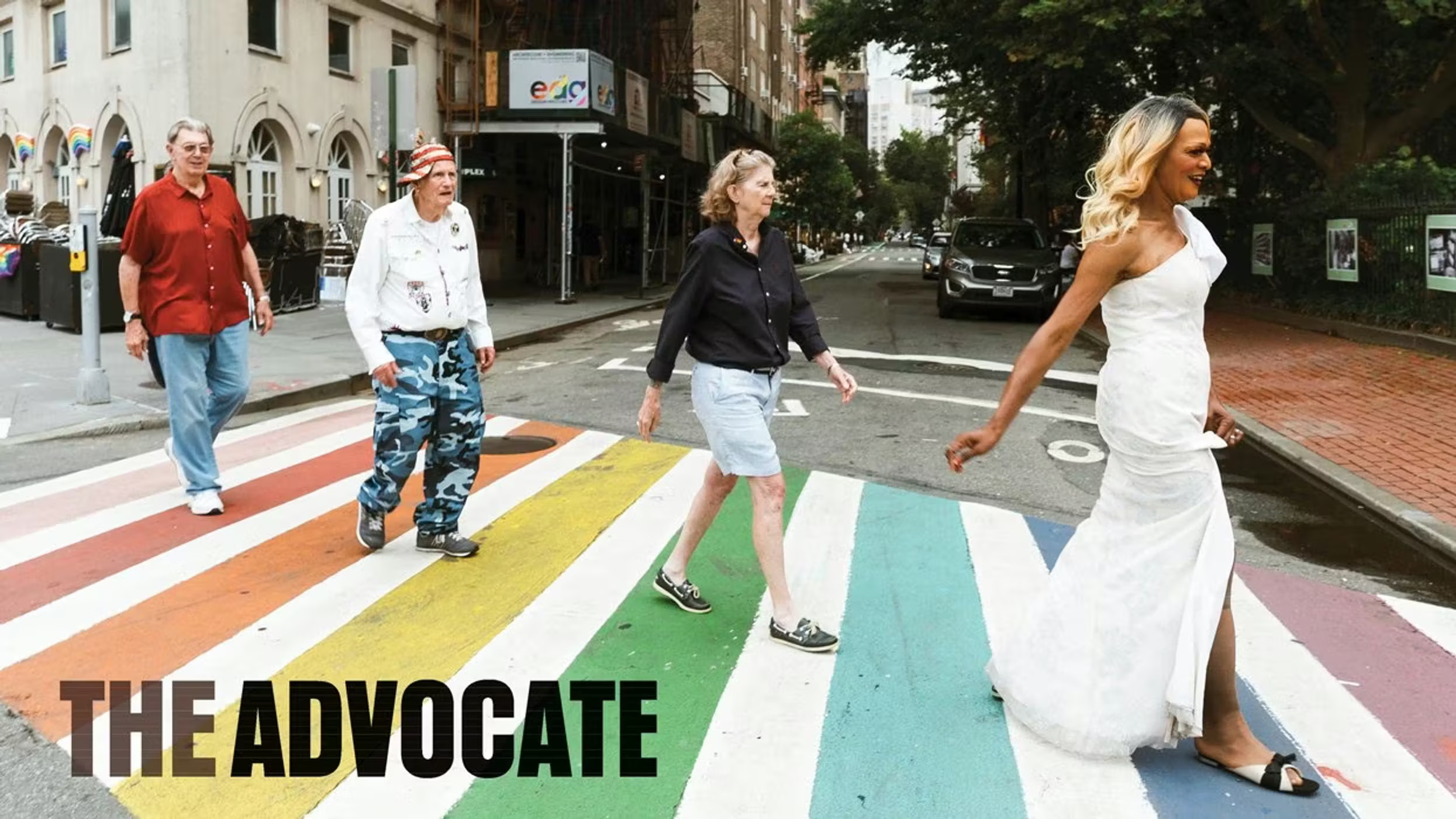
Four local legends walk across a rainbow crosswalk in NYC's West Village.Roland Fitz
In the historic West Village of New York City, a silent battle for communal survival and historical preservation is currently unfolding. Once the cradle of the 1969 Stonewall uprising and the modern LGBTQ rights movement, this multicultural sanctuary now faces unprecedented dual pressures: relentless real estate gentrification on one side, and deliberate historical erasure by top national authorities on the other.
For decades, the West Village has served as a spiritual home for the diverse gender community. Columbia University history professor George Chauncey notes that as early as the 1920s, the area attracted bohemian artists and marginalized groups due to its relative affordability. During World War II, as a major port city, New York welcomed throngs of soldiers, further cementing the Village's reputation for inclusivity. However, over time, the rainbow hues of this former safe haven have gradually faded.
The most immediate threat is severe economic displacement. As developers continuously construct luxury apartments and drive up rental prices astronomically, many senior residents who planted roots decades ago, alongside small queer-owned businesses, are being forced out. Randy Wicker, an equality activist who ran an antique lighting shop for 29 years, shared that he had to shutter his business—once a sanctuary for early transgender pioneers—after monthly rent soared to thousands of dollars. Concurrently, an influx of affluent, predominantly straight youth has transformed the demographic landscape, replacing traditional gay bars and safe spaces with high-end restaurants and cafes. An 86-year-old eyewitness known as "Tree," who spent half a century working at the Stonewall Inn, lamented that the numerous gay venues that once populated the streets now exist mostly in memory, with the community's nightlife hub forcibly migrating northward.
More alarming than skyrocketing rent is the systematic historical concealment at the official level. According to directors of community preservation projects, the current national administration is employing various executive measures to strip LGBTQ visibility from the public sphere. This includes scrubbing historical documents regarding transgender identities from national monument websites and freezing federal funding earmarked for designating the former residences of prominent civil rights leaders as historic landmarks.
Facing the risk of cultural uprooting, grassroots organizations such as the "NYC LGBT Historic Sites Project" are racing against time. They are dedicated to securing national landmark status for core sites like Julius' Bar, the location of a pivotal 1966 "sip-in" protest, to prevent cultural tragedies akin to the 2018 demolition of the legendary Paradise Garage nightclub.
Preserving history is not merely about remembering the past; it is about defending the right to exist in the present. The local municipal official representing the district has explicitly vowed to resist official attempts to erase the public history of the LGBTQ community. He emphasized that the West Village must remain a "living archive" of diverse lifestyles, asserting that erasing a community's history is fundamentally tantamount to eradicating them from the fabric of American life.
North American Editorial Office: Robin