
Chinese Mainland Medical institutions have reported a year-on-year increase in patients seeking treatment for internal foreign bodies. These incidents, often linked to private behaviors, pose significant physiological risks, which are frequently exacerbated by patients' reluctance to seek timely medical intervention due to perceived social stigma.
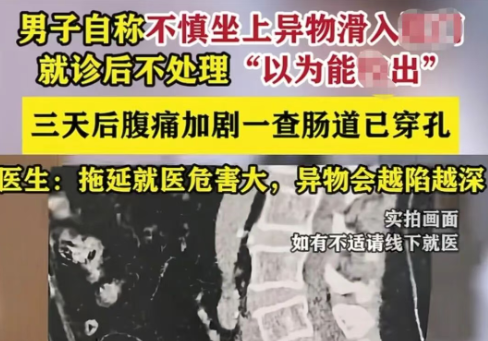
In a recent clinical case, a male patient suffered an intestinal perforation after an adult product became lodged in his body. Despite initial medical advice for immediate removal, the patient waited three days in hopes of spontaneous evacuation. This delay led to a severe intra-abdominal infection, necessitating an emergency laparotomy and a temporary colostomy. The patient will require a secondary reversal surgery in three to six months.
Demographic data reveals that over 90% of these patients are male. Medical professionals note that certain demographics, including the LGBTQ and MSM (men who have sex with men) communities, are disproportionately represented due to specific behavioral patterns. Documented cases in 2025 include a 40-year-old male with a 20-cm metal object and a 61-year-old individual who required extensive anti-infection treatment following the removal of a large organic object that caused ischemic ulcers.
Surgeons emphasize that the anatomical structure of the rectum, characterized by physiological curves and sphincteric action, makes the self-expulsion of large or rigid objects nearly impossible. Common objects retrieved by medical teams include wooden sticks, fruits, and metal hardware.
Asian Editorial Department: Lu Junxiu