
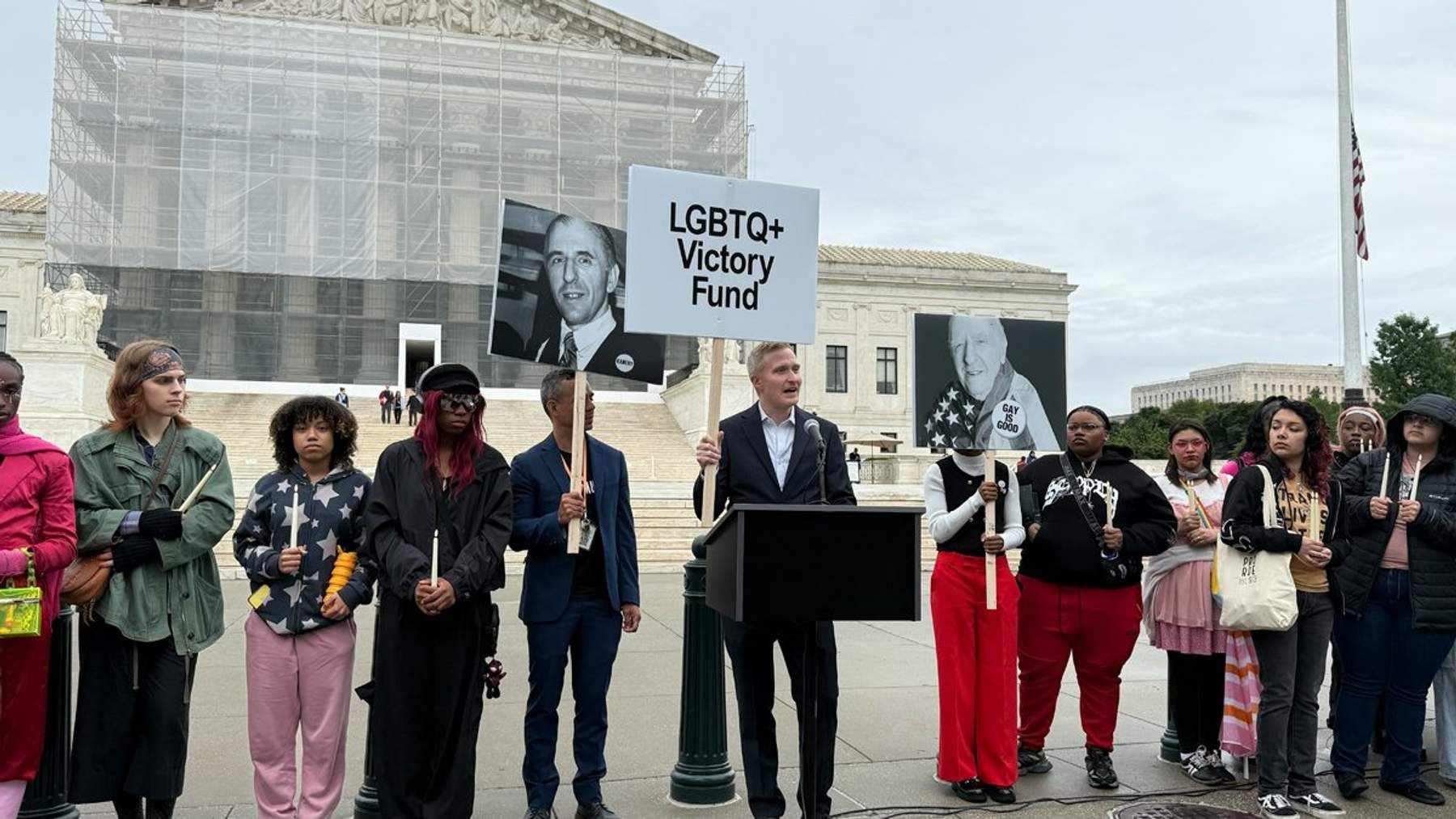
LGBTQ+activists gathered together to celebrate the 100th anniversary of Frank Carmeny's birth and the 10th anniversary of marriage equality. Christopher Wiggins for The Advocate. Image source: Advocate
On Wednesday, the steps of the United States Supreme Court became the site of a solemn yet resolute gathering, as civil rights advocates assembled to mark two concurrent milestones: the tenth anniversary of Obergefell v. Hodges — the ruling that established marriage rights for same-sex couples nationwide — and the centennial of Frank Kameny, widely regarded as the founding architect of the American LGBTQ civil rights movement.
Kameny was a Harvard-trained astronomer and decorated World War II veteran who was dismissed from federal employment in 1957 on the basis of his sexual orientation. That dismissal set him on a decades-long course of advocacy that would fundamentally reshape the legal and social landscape for LGBTQ Americans. He died in 2011.
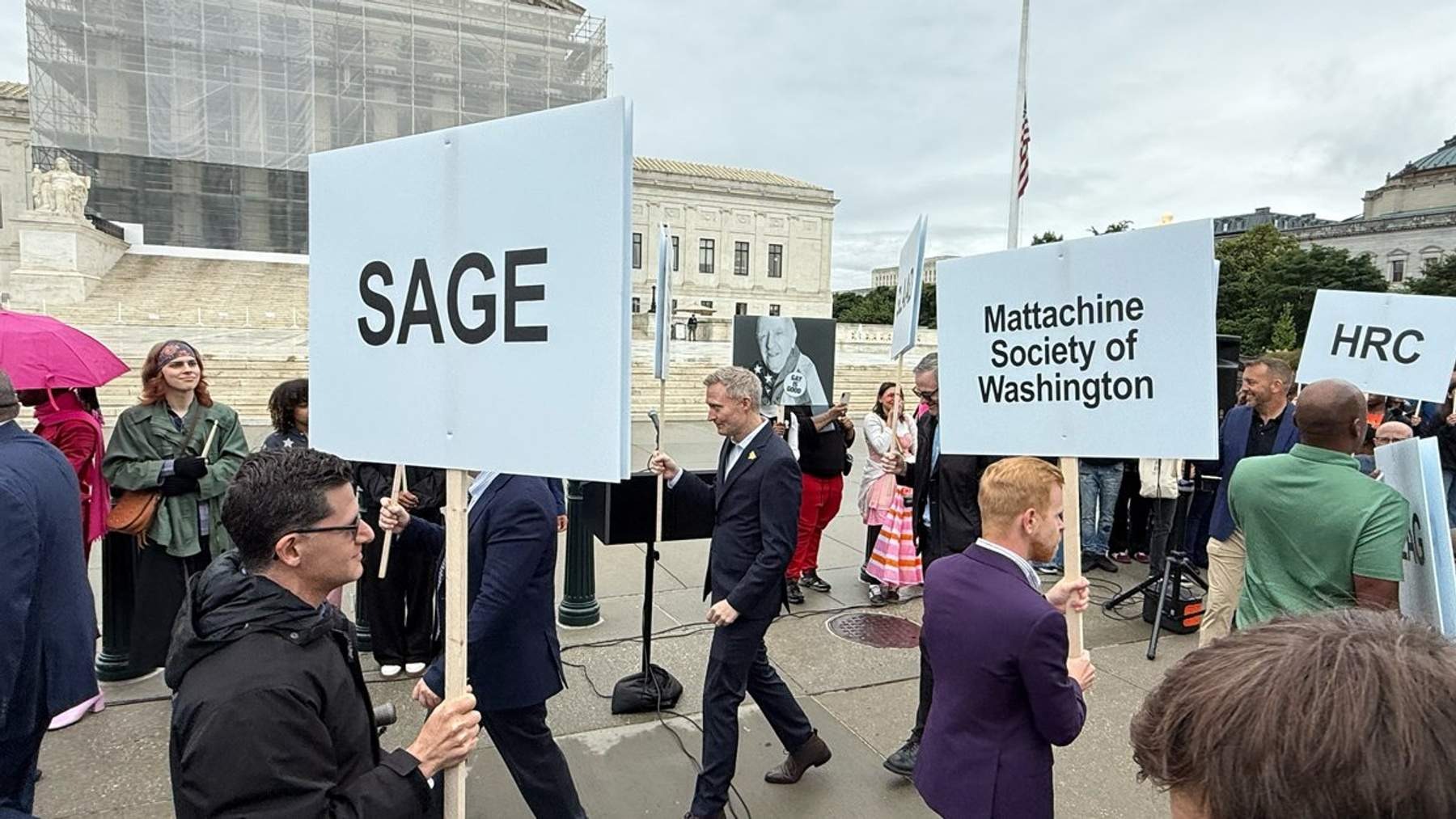
LGBTQ+activists gathered together to celebrate the 100th anniversary of Frank Carmeny's birth and the 10th anniversary of marriage equality. Christopher Wiggins for The Advocate. Image source: Advocate
One Hundred Candles for One Hundred Years
More than 100 advocates from over a dozen national organizations gathered holding candles — one for each year since Kameny's birth — in a ceremony organized by Equality Forum. Participants also reenacted Kameny's historic 1965 pickets at the White House and Independence Hall, drawing a deliberate line between the struggles of the past and the challenges of the present.
Malcolm Lazin, founder of Equality Forum, described the event as both a tribute and a declaration. "Frank Kameny was one of this nation's foremost civil rights leaders," Lazin said. "And our presence here today is also a direct response to policies that continue to harm transgender service members."
Keith Joseph, board chair of Equality Forum, outlined Kameny's foundational contributions to the movement: co-founding the Mattachine Society of Washington; establishing the first coordinated national advocacy networks; submitting the first known LGBTQ rights brief to the Supreme Court; mentoring service members like Leonard Matlovich; and authoring the enduring rallying cry, "Gay is Good."
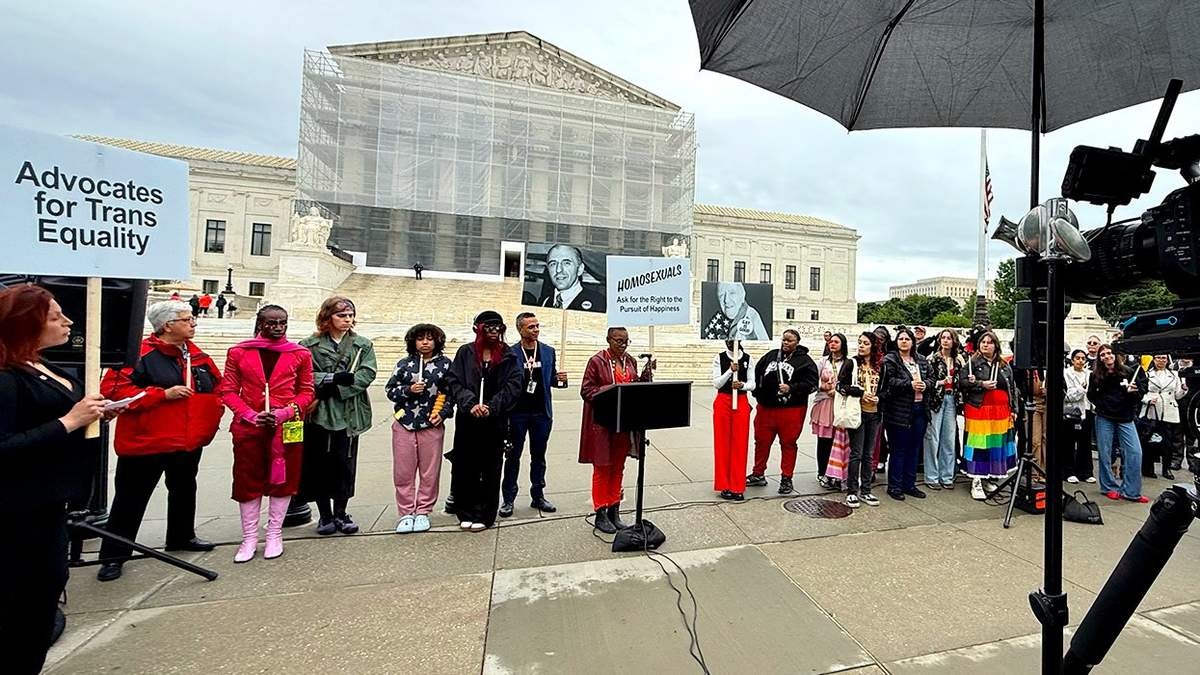
LGBTQ+activists gathered together to celebrate the 100th anniversary of Frank Carmeny's birth and the 10th anniversary of marriage equality. Christopher Wiggins for The Advocate. Image source: Advocate
Lead Plaintiff Returns With a Heavy Heart
Jim Obergefell, the lead plaintiff in the case that bears his name, returned to the Supreme Court steps a decade later in a markedly different spirit. "Two justices have plainly stated their desire to overturn this ruling," he said. "That is not rhetorical posturing. That is a direct threat."
The sight of the courthouse draped in scaffolding for repairs struck Obergefell as symbolic. "My immediate reaction when I saw the building covered like that was straightforward — the court ought to be hiding its face," he said.
Kevin Jennings, chief executive of Lambda Legal, expressed the same sentiment. His organization is currently engaged in federal litigation challenging administrative policies affecting LGBTQ individuals. Drawing on the legacy of Kameny, Jennings offered a pointed summary of the path forward: "Frank had no patience for grievance without action. He would tell us to stop complaining and get to work."
A Critical Juncture for Transgender Rights
Elliott Imse, executive director of the LGBTQ Victory Institute, highlighted the looming significance of United States v. Skrmetti, a pending Supreme Court case that will determine whether transgender minors retain legal access to gender-affirming medical care.
"There is no question that our community — and particularly the transgender community — is at a crisis point," Imse said. "But today also serves as a reminder of the distance we have already traveled."
Imse noted that younger advocates have drawn resolve from studying the history of the movement. "History shows us that the road has always had difficult stretches," he said. "But it has also always moved forward."
From 39 Protesters to One Million: The Arc of a Movement
The ceremony closed with a reflection on the remarkable trajectory of LGBTQ organizing in America. From the 39 individuals who participated in the first Annual Reminder demonstration in 1965, to the more than one million who attended the Millennium March on Washington in 2000, the breadth of the movement stands as testament to what sustained civic engagement can achieve.
New York Representative Ritchie Torres, who was unable to attend due to a House Financial Services Committee vote, submitted a written statement affirming that Kameny's advocacy had made his own presence in Congress possible. "His relentless pursuit of justice reminds us that progress is achievable when injustice is met with resilience and pride," Torres wrote.
Obergefell closed with a statement that captured the mood of the gathering. "This court has abandoned precedent," he said. "But this is not the final word on the rights of LGBTQ Americans. If we want progress, we have to show up — and we have to fight."
North American Editorial Office: Robin